How to Play Big Small Game: Complete Rules, Odds and Strategy Guide
Big Small is one of the easiest dice betting games to understand. The basic idea is simple: three dice are rolled, and players bet on whether the total will be Big or Small. Because the rules are quick and the betting options are clear, many beginners search for how to play Big Small game before trying casino-style dice games online or in live dealer rooms.
In many casinos, Big Small is connected to Sic Bo, a traditional three-dice game with many betting options. The Big and Small bets are usually the most beginner-friendly parts of the table. They are simple, fast and easier to understand than exact totals, doubles, triples or combination bets.
However, simple does not mean risk-free. Big Small is still a gambling game with a house edge. The best way to play is to understand the rules, know what Big and Small mean, check the payout table, avoid high-risk side bets and set clear limits before betting.
This guide explains Big Small rules, payouts, odds, common mistakes, strategy, mobile safety and responsible play tips.
What Is the Big Small Game?
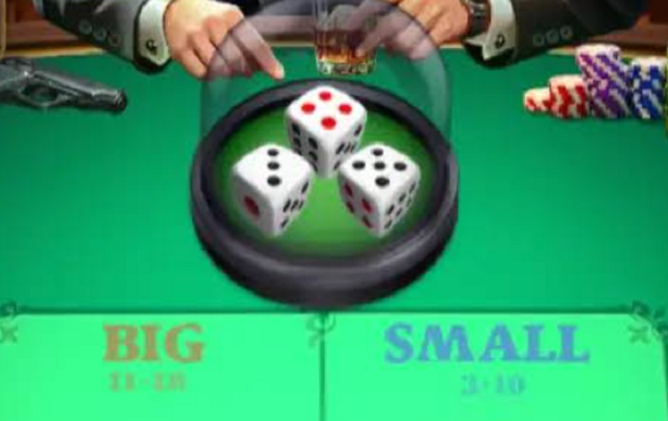
Big Small is a dice betting game based on the total result of three dice. Players usually bet on one of two main outcomes:
- Big
- Small
After bets are placed, three dice are rolled. The total of the dice decides the result.
In the common casino version, Small usually means a total from 4 to 10, while Big usually means a total from 11 to 17. Triples are often excluded from Big and Small results, even if the total would otherwise fall inside the range.
For example:
- 2 + 3 + 4 = 9, so Small wins.
- 5 + 5 + 3 = 13, so Big wins.
- 6 + 6 + 6 = triple, so Big usually loses even though the total is 18.
- 1 + 1 + 1 = triple, so Small usually loses even though the total is 3.
This triple exclusion is important. Beginners sometimes think Big covers 11 to 18 and Small covers 3 to 10, but that is usually not correct in casino play.
Quick Answer: How Do You Play Big Small Game?
To play Big Small, choose whether the three-dice total will be Big or Small, place your bet before the roll, wait for the dice result and receive a payout if your prediction is correct.
| Step | What You Do |
| 1 | Choose Big or Small |
| 2 | Place your bet before betting closes |
| 3 | Three dice are rolled |
| 4 | Dice total is calculated |
| 5 | Big or Small result is settled |
| 6 | Winning bets are paid |
| 7 | Losing bets are collected |
The easiest beginner approach is to start with only Big and Small bets. Other bets may pay more, but they are usually harder to win and can carry a higher house edge.
Big Small Game Rules for Beginners
The standard Big Small rules are simple:
- Three dice are used.
- Players place bets before the dice are rolled.
- The result is based on the total of all three dice.
- Small usually wins on totals from 4 to 10.
- Big usually wins on totals from 11 to 17.
- Any triple usually causes Big and Small bets to lose.
- Winning bets are paid according to the table rules.
A triple means all three dice show the same number, such as:
- 1-1-1
- 2-2-2
- 3-3-3
- 4-4-4
- 5-5-5
- 6-6-6
This matters because triples create the casino advantage on Big and Small bets. Without the triple exclusion, Big and Small would be closer to even outcomes. With triples excluded, the house has an edge.
How the Big Bet Works
The Big bet wins when the total of the three dice is usually between 11 and 17, excluding triples.
Examples of winning Big results:
| Dice Result | Total | Result |
| 4-4-5 | 13 | Big wins |
| 6-5-3 | 14 | Big wins |
| 2-6-6 | 14 | Big wins |
| 5-5-6 | 16 | Big wins |
| 6-6-5 | 17 | Big wins |
Examples where Big loses:
| Dice Result | Total | Why Big Loses |
| 1-2-3 | 6 | Small total |
| 2-3-5 | 10 | Small total |
| 6-6-6 | 18 | Triple |
| 4-4-4 | 12 | Triple excluded |
| 1-1-1 | 3 | Triple |
The Big bet is popular because it is easy to understand and usually pays close to even money. In many versions, the payout is 1:1.
How the Small Bet Works
The Small bet wins when the total of the three dice is usually between 4 and 10, excluding triples.
Examples of winning Small results:
| Dice Result | Total | Result |
| 1-2-3 | 6 | Small wins |
| 2-2-3 | 7 | Small wins |
| 1-4-5 | 10 | Small wins |
| 3-3-4 | 10 | Small wins |
| 1-1-4 | 6 | Small wins |
Examples where Small loses:
| Dice Result | Total | Why Small Loses |
| 5-5-3 | 13 | Big total |
| 6-4-4 | 14 | Big total |
| 1-1-1 | 3 | Triple |
| 3-3-3 | 9 | Triple excluded |
| 6-6-6 | 18 | Triple |
Small is the opposite of Big. It also usually pays 1:1 in common casino versions.
Big Small Payouts, Odds and House Edge
In many Sic Bo-style Big Small games, Big and Small pay 1:1. That means if you bet $10 and win, you receive $10 profit plus your original stake back.
However, the bet is not exactly 50/50 because triples are excluded. This creates the house edge.
A common Big/Small structure looks like this:
| Bet | Winning Result | Common Payout | Approximate House Edge |
| Big | Total 11–17, excluding triples | 1:1 | About 2.78% |
| Small | Total 4–10, excluding triples | 1:1 | About 2.78% |
This is why Big and Small are often considered among the better beginner bets on a Sic Bo table. They have a lower house edge than many side bets, although they still favour the casino over time.
RTP is the opposite of house edge.
100% – House Edge = RTP
So if the house edge is about 2.78%, the RTP is about 97.22%.
RTP is a long-term number. It does not guarantee that one session will return 97.22% of your money.
Big Small vs Sic Bo: Are They the Same?
Big Small and Sic Bo are closely related, but they are not always used in exactly the same way.
Sic Bo is a full three-dice casino game with many betting options. Big and Small are two of the most common bets inside Sic Bo. Some online casinos may use “Big Small” as a simplified name for a dice game focused mainly on those two outcomes.
| Term | Meaning |
| Big Small | Usually focuses on Big or Small total bets |
| Sic Bo | Full three-dice game with many bet types |
| Hi-Lo Dice | Another simplified name for total-range betting |
| Live Big Small | Dealer-hosted version streamed online |
| RNG Big Small | Software-generated dice result |
If you open a casino table and see many extra bets such as triples, exact totals, doubles and combinations, you are probably playing a Sic Bo-style version. If you see only Big and Small, it is a simplified format.
Other Common Bets in Big Small Dice Games
Many Big Small tables include extra bets. These may look attractive because they pay more, but they are usually harder to win.
Common side bets include:
| Bet Type | What It Means | Risk Level |
| Exact total | Predict the exact sum of the three dice | Medium to high |
| Any triple | Any three matching dice | High |
| Specific triple | A specific triple, such as 5-5-5 | Very high |
| Double | A specific pair appears | High |
| Single number | A chosen number appears on one or more dice | Varies |
| Two-dice combination | Two selected numbers appear | Medium |
| Odd/Even | Total is odd or even, depending on rules | Varies |
Side bets can add entertainment, but they can also increase volatility. Beginners should focus on Big and Small before trying more complex bets.
How to Play Big Small Game Step by Step
Step 1. Choose a Legal and Trusted Platform
Use only legal, licensed platforms if real-money play is allowed in your location. For learning, choose demo mode or free-play versions.
Step 2. Open the Rules or Paytable
Before betting, check the rules. Confirm the Big and Small ranges, whether triples are excluded and what the payouts are.
Step 3. Choose Big or Small
Pick one of the two main bets. Beginners should avoid placing many side bets at first.
Step 4. Set Your Stake
Choose a small stake that fits your budget. Dice games can move quickly, so do not overbet.
Step 5. Place the Bet Before the Timer Ends
In live or online versions, betting closes before the dice are rolled.
Step 6. Watch the Dice Result
Three dice are rolled. The total is calculated, and the result is settled.
Step 7. Review the Outcome
If your bet wins, the payout is added to your balance. If not, the stake is lost.
Step 8. Stop at Your Limit
Set a loss limit and win target before playing. Stop when either limit is reached.
Best Big Small Strategy for Beginners
No Big Small strategy can guarantee profit. The dice result is random in a fair game. The best strategy is to choose better bets, manage your budget and avoid risky myths.
Start With Big and Small Only
These are the simplest bets and usually have a lower house edge than many side bets.
Avoid Complex Side Bets at First
Exact totals and triples can pay more, but they are harder to hit.
Use Flat Betting
Flat betting means using the same stake every round. For example, betting $2 each round instead of changing constantly.
Choose Low Table Limits
Pick a table where the minimum bet is comfortable. If the minimum is too high, your bankroll can disappear quickly.
Set a Stop-Loss
A stop-loss is the maximum amount you are willing to lose in one session.
Set a Win Target
A win target helps you lock in profit instead of giving it back.
Do Not Chase Losses
A losing result does not make the next result safer.
Betting Systems: What Works and What Does Not
Some players use betting systems such as Martingale, Paroli or Fibonacci. These systems change stake size based on wins or losses. They do not change the dice odds.
Martingale
Martingale means doubling after every loss. The idea is to recover losses with one win. The problem is that losing streaks happen, and table limits can stop the system.
Paroli
Paroli means increasing bets after wins. It can be less aggressive than Martingale, but it still does not remove the house edge.
Fibonacci
Fibonacci betting uses a sequence to decide stake increases. It may feel structured, but it still depends on future wins.
| System | Main Problem |
| Martingale | Large losses can grow quickly |
| Paroli | Win streaks are not guaranteed |
| Fibonacci | Does not change probability |
| Pattern betting | Past results do not predict the next roll |
The safest method for beginners is flat betting with fixed limits.
Live Big Small vs RNG Big Small
Big Small can be played in live dealer or RNG format.
| Feature | Live Big Small | RNG Big Small |
| Dice | Physical dice or live equipment | Software-generated |
| Dealer | Real presenter or dealer | No live dealer |
| Speed | Slower and more realistic | Faster |
| Atmosphere | Live casino feel | Digital game feel |
| Best for | Players who like real-time presentation | Quick demo learning |
| Risk | Still has house edge | Still has house edge |
Live games can feel more exciting because a real dealer rolls or presents the result. RNG games are usually faster. Faster games can create faster losses if you do not set limits.
Mobile Play, Apps and APK Safety
Big Small games are often mobile-friendly. Many can be played directly in a mobile browser, so an APK is not always needed.
Be careful with gambling APKs from unknown websites. Fake apps can steal data, show fake balances or block withdrawals.
Avoid apps described as:
- Big Small hack APK
- Big Small predictor
- Big Small mod app
- Guaranteed win dice app
- No-loss betting system
- Unlimited balance app
Before installing any app, check:
- Legal availability in your location
- Operator licence
- Official app source
- App permissions
- Secure login
- Withdrawal terms
- KYC policy
- Responsible gambling tools
A dice game app should not need SMS, contacts, call logs or device administrator access.
Real-Money Play, Withdrawals and KYC
If Big Small is played for real money in a legal market, the casino controls deposits, withdrawals and account checks.
Before depositing, read:
| Item | Why It Matters |
| Minimum deposit | Helps plan your budget |
| Minimum withdrawal | Shows when cashout is possible |
| Maximum withdrawal | Large wins may be paid in parts |
| Processing time | Withdrawals may take hours or days |
| KYC rules | Identity checks may be required |
| Bonus terms | Bonus money may lock withdrawals |
| Payment methods | Some methods may not support cashout |
| Restricted regions | Some users may not be eligible |
KYC means Know Your Customer. Licensed platforms may ask for ID, proof of address or payment verification. Never send documents to Telegram agents or unofficial support accounts.
Responsible Play Tips
Big Small is simple and fast, which can make it easy to overplay. Treat it as entertainment, not income.
Use these responsible play habits:
- Play only where casino gaming is legal.
- Use licensed platforms.
- Start with demo mode.
- Learn the rules before betting.
- Use small stakes.
- Set a session budget.
- Set a loss limit.
- Set a win target.
- Avoid chasing losses.
- Avoid high-risk side bets as a beginner.
- Do not borrow money to play.
- Take regular breaks.
- Stop if the game causes stress or financial pressure.
The safest player is not the one who guesses every roll. It is the one who controls risk and stops at the right time.
FAQs About How to Play Big Small Game
What is Big Small game?
Big Small is a three-dice betting game where players usually bet on whether the total will be Big or Small.
How do you play Big Small game?
Choose Big or Small, place your bet, wait for three dice to roll and win if the result matches your selection.
What numbers are Big and Small?
In common casino rules, Small is 4 to 10 and Big is 11 to 17. Triples are usually excluded.
What happens if the dice show a triple?
In many versions, Big and Small bets lose when any triple appears, even if the total is in the Big or Small range.
What is the payout for Big and Small?
Big and Small commonly pay 1:1, but players should always check the table rules.
What is the house edge on Big and Small?
In common Sic Bo-style rules, Big and Small have an approximate house edge of 2.78%.
Is Big Small the same as Sic Bo?
Big Small is often part of Sic Bo. Sic Bo includes more bets, while Big Small focuses on the total being high or low.
Can Big Small be predicted?
No. In a fair game, dice results are random. Past rolls do not predict future rolls.
What is the best Big Small strategy?
The best practical strategy is to stick with Big and Small bets, use flat stakes, avoid chasing losses and set clear limits.
Conclusion: How to Play Big Small Game Safely
Learning how to play Big Small game is easy. Three dice are rolled, and players bet on whether the total will be Small or Big. Small usually covers totals from 4 to 10, while Big usually covers totals from 11 to 17. Triples are commonly excluded, which creates the house edge.
The best beginner approach is simple: start with Big and Small bets, avoid complex side bets, use small flat stakes and read the paytable before playing. Do not trust patterns, predictors or betting systems that promise guaranteed wins. The dice result cannot be controlled.
Big Small can be fun because it is quick and easy to follow. But it is still a casino game with real risk. Play only where legal, use licensed platforms, start with demo mode and set limits before the first bet.
The smartest way to play Big Small is not to chase every roll. It is to understand the rules, manage your bankroll and stop when your limit is reached.